
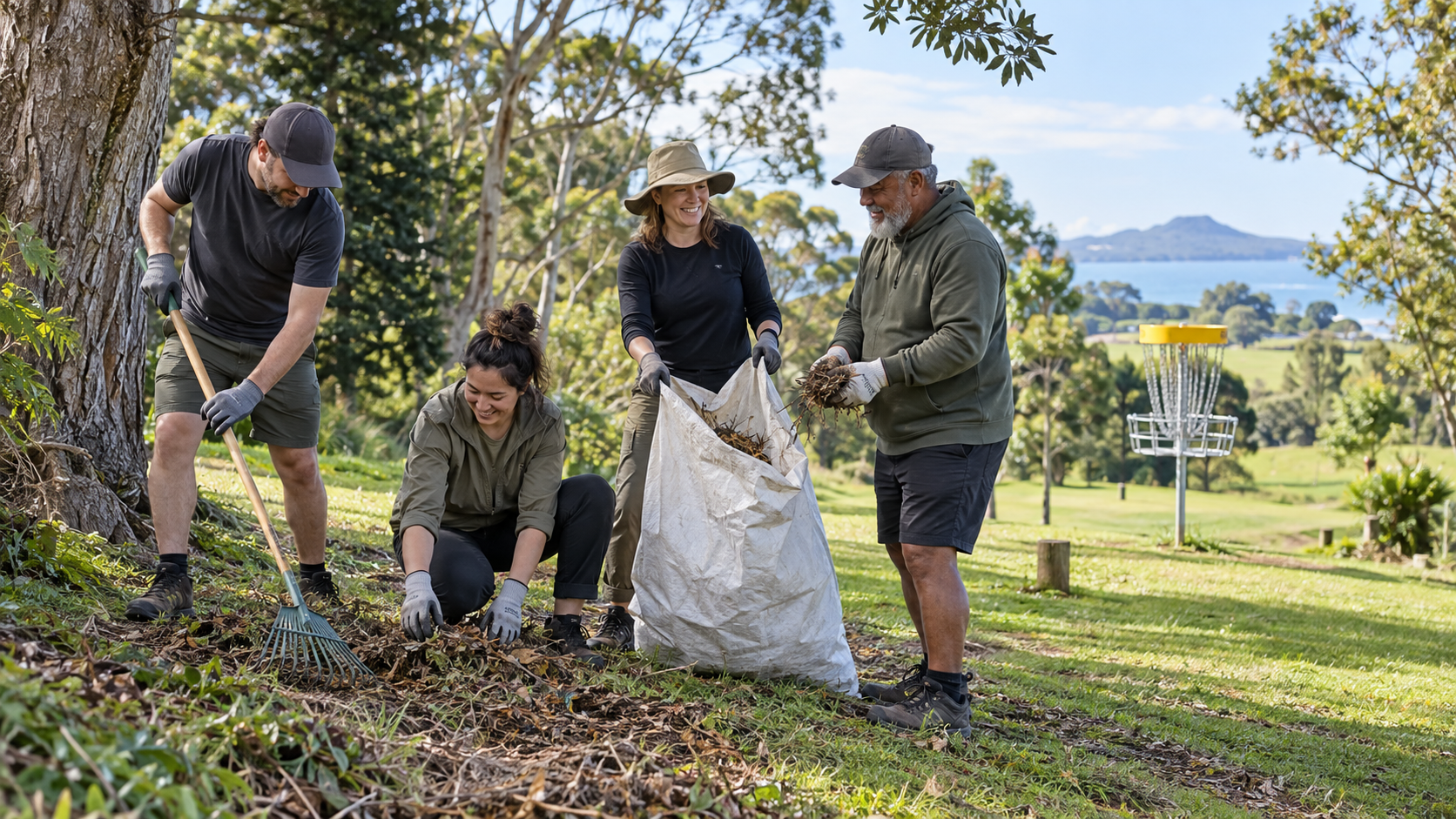
A tidy, well-cared-for course is easier to enjoy and easier to share with the wider park community. A club working bee does not need to become a major landscaping project: with permission, a short list and a few clearly assigned jobs, a group can make a visible difference in one morning.
This idea fits the way NZDG describes good course development: courses should work with the natural setting, share space with other park users and keep safety at the centre. Use the NZDG course guidance as a starting point, then follow the land manager’s instructions for your local site.
Start with permission and a small target
Contact the council, reserve manager, landowner or club contact before planning work. Confirm what volunteers may do, where green waste and rubbish should go, and whether any tools or protective equipment are restricted. Do not remove trees, reshape ground, move signs or change a hole layout without the relevant approval.
Choose one modest outcome for the first session. It could be clearing loose rubbish from the fairway edges, trimming back a permitted overgrowth area, refreshing a sign location or checking that tee and basket approaches are easy to find. A focused target is easier to explain and easier to finish.
Make a short job list
Walk the course before the working bee and write down the jobs in order of importance. Separate simple volunteer tasks from anything that needs a qualified contractor or land-manager decision. Useful headings include litter collection, leaf and branch removal, path-edge visibility, signage checks, tee-area tidying and a final safety walk.
Keep the list visible on the day. A simple job board or shared phone note can show which areas are complete and stop several people from doing the same task while another hole is missed. Take a few before-and-after photos for the club’s records, but avoid photographing members of the public without permission.
Give people safe, clear roles
Start with a short briefing. Explain the work area, where volunteers may stand, what to do if they find broken glass or another hazard, and when the course is closed to play. During active work, pause throwing through that area. Disc golf is played in shared spaces, so keep paths, playgrounds, dog walkers and other park users in mind.
Offer different roles so people can contribute comfortably: a course walker with a rubbish sack, a spotter for a work area, a tool user where permitted, a sign or map checker, and a person keeping the job list moving. Gloves, closed shoes, water and sun or rain protection are sensible basics. If a task involves heights, powered tools, heavy lifting or uncertain vegetation, leave it to the appropriate person.
Work with the park, not against it
NZDG’s course guidance emphasises using the character of the land and designing for coexistence with the wider community. A working bee should follow the same principle. Clear what creates a genuine safety or access problem, but do not strip away every natural feature just to make the course look manicured.
When in doubt, stop and ask the land manager. The best result is a course that remains recognisably part of its setting, is safer to navigate and is more welcoming to the people who share the space.
Finish with a simple review
Before everyone leaves, walk the affected holes again. Check that no tools, rubbish, loose branches or temporary markers have been left behind. Confirm that tees and baskets are visible, access routes are clear and the course can safely reopen. Record any follow-up work rather than trying to solve every problem in one session.
Thank the volunteers, share what was completed and set a realistic date to review the area. Regular small check-ins are easier to sustain than waiting until a course needs a major rescue.
Frequently asked questions
1. Do we need permission for a disc golf course working bee?
Yes. Contact the relevant council, reserve manager, landowner or club contact before planning work, and follow their instructions about tools, vegetation, rubbish and layout changes.
2. What should a first working bee focus on?
Choose one modest outcome such as litter collection, tidying permitted edges, checking signs or improving visibility around a tee or basket approach.
3. Can volunteers remove trees or reshape the course?
Not without the relevant approval. Separate volunteer tasks from work that needs a qualified contractor or a land-manager decision.
4. What safety rules matter most on the day?
Brief volunteers, define the work area, pause throwing through active work and keep paths and other park users in mind. Stop and ask for help when a hazard is uncertain.
5. What should volunteers bring?
Gloves, closed shoes, water and suitable sun or rain protection are sensible basics. Only bring tools that the land manager has allowed.
6. How often should a club hold a working bee?
There is no single schedule for every course. Small, regular check-ins are often easier to sustain than waiting until major work is needed.