
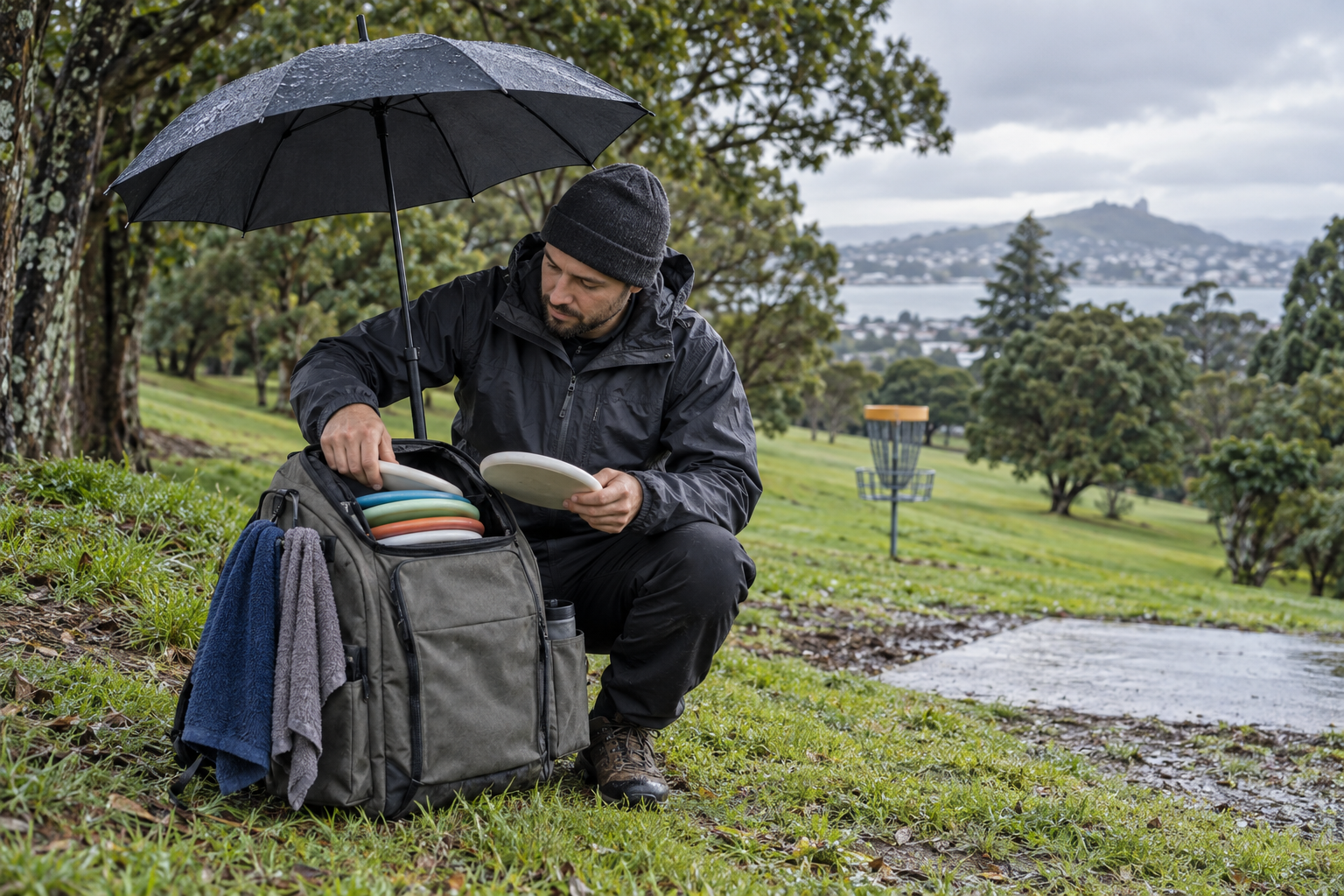
Wet-weather disc golf is easier when the kit helps you stay comfortable without turning your bag into a travelling cupboard. In Aotearoa, a forecast can change between the car park and the back nine, so the goal is simple: keep your hands, discs and footing as reliable as the conditions allow.
NZDG’s beginner guidance keeps the essentials modest: comfortable clothing, suitable footwear and a small group of familiar discs. Rain does not change that principle; it just makes preparation more valuable. The NZDG equipment guide is a useful baseline, while the PDGA’s event guidance also highlights extra towels, an umbrella and dry clothing for wet conditions.
Start with the layers you will actually wear
Choose a waterproof or water-resistant outer layer that still lets your shoulders move freely. A light shell is often more useful than a heavy coat because you can throw comfortably and add warmth underneath when needed. Keep a dry mid-layer in the car or in a protected bag pocket rather than carrying every spare layer on the course.
For trousers, prioritise movement and quick drying. If the ground is wet, long trousers can also reduce the amount of mud and grass that reaches your legs. The best choice depends on the course and the forecast; the important thing is that your clothing lets you walk, bend and throw without distraction.
Footwear matters more than another disc
Wet tees, slopes and leaf-covered paths reward shoes with dependable grip. NZDG recommends supportive footwear suitable for varied terrain, and that advice becomes more important when the ground is slippery. Check the sole before you leave, and do not rely on worn trainers if the course is likely to be muddy.
Pack a dry pair of socks. They weigh very little, can make the trip home much more pleasant and are useful if a puddle is deeper than it looked. If you are walking a longer course, a small plastic or waterproof bag for wet footwear keeps the rest of your gear cleaner.
Build a dry-disc system
One towel is better than none, but two or three towels with different jobs are easier to manage. Keep one towel available for the disc in your hand, one for your hands and one as a spare. Clip them where they can be reached quickly, but protect at least one from the rain until you need it.
Use a simple routine: dry your hand, dry the rim and flight plate, choose your line, then throw without standing exposed longer than necessary. Put wet discs in a separate pocket or small bag so they do not soak the towel you are trying to keep dry. Avoid leaving discs on muddy ground when a clean towel or upturned bag is available.
Use an umbrella or shelter strategically
An umbrella is most useful between throws, at the tee while you are planning, or beside the bag while another player throws. It should never create a distraction or a hazard for the group. If the wind makes it awkward, a waterproof bag cover and a quick towel routine may be the better option.
Keep your phone, keys and scorekeeping method in a genuinely waterproof pocket. A zip bag inside a normal pocket is a cheap second layer of protection, but check that you can still access what you need without exposing the rest of the bag.
Choose a rain-friendly game plan
Wet weather can change grip and footing, so take a little speed off throws that depend on maximum power. Prioritise a controlled run-up, a stable stance and a clean release. If the tee is slick, shorten your steps or throw from a balanced standstill rather than forcing a full run-up.
Do not turn a gear problem into a safety problem. If there is lightning, dangerous wind, flooding or another hazard, follow the event organiser or land manager’s direction and leave the course when necessary. The PDGA competition manual makes player safety the priority when hazardous conditions make play impractical or dangerous.
Pack the small extras
A practical wet-weather kit can fit in a few pockets: dry socks, spare towels, a small rubbish bag, a waterproof phone pouch, hand warmers for cold days and a snack or drink for the round. Add sunscreen when the forecast is mixed; clouds do not guarantee that you will avoid sun exposure.
After the round, dry the discs and open the bag so damp fabric can air out. Shake mud from shoes before storing them, and check towels and clothing before they develop a musty smell. Looking after the kit is part of making it ready for the next round.
Frequently asked questions
1. What is the most important wet-weather disc golf item?
Reliable footwear and a way to keep your hands and discs dry are the best starting points. The right balance depends on the course, forecast and ground conditions.
2. How many towels should I bring?
Bring more than one if rain is likely. A separate towel for your hand, disc and spare makes it easier to keep at least one useful towel dry.
3. Are waterproof jackets restrictive for throwing?
Some can be, so choose a layer that allows your shoulders and arms to move freely. A light shell over a flexible mid-layer can be more practical than a heavy coat.
4. Should I use an umbrella while throwing?
Use an umbrella between throws or beside the bag, but keep it out of the throwing space and avoid creating a hazard or distraction for your group.
5. What should I do if a tee pad or fairway becomes dangerous?
Stop and reassess. Shorten your run-up, use a balanced standstill or leave the area. For organised play, follow the tournament director’s safety instructions.
6. How should I dry my disc golf gear after a wet round?
Dry the discs, open the bag, air out damp fabric and shake mud from footwear before storing everything. Keep wet clothing and towels separate until they are dry.