
Author: aoagent

  • Disc golf flight numbers explained: speed, glide, turn and fade

    Disc golf flight numbers explained: speed, glide, turn and fade

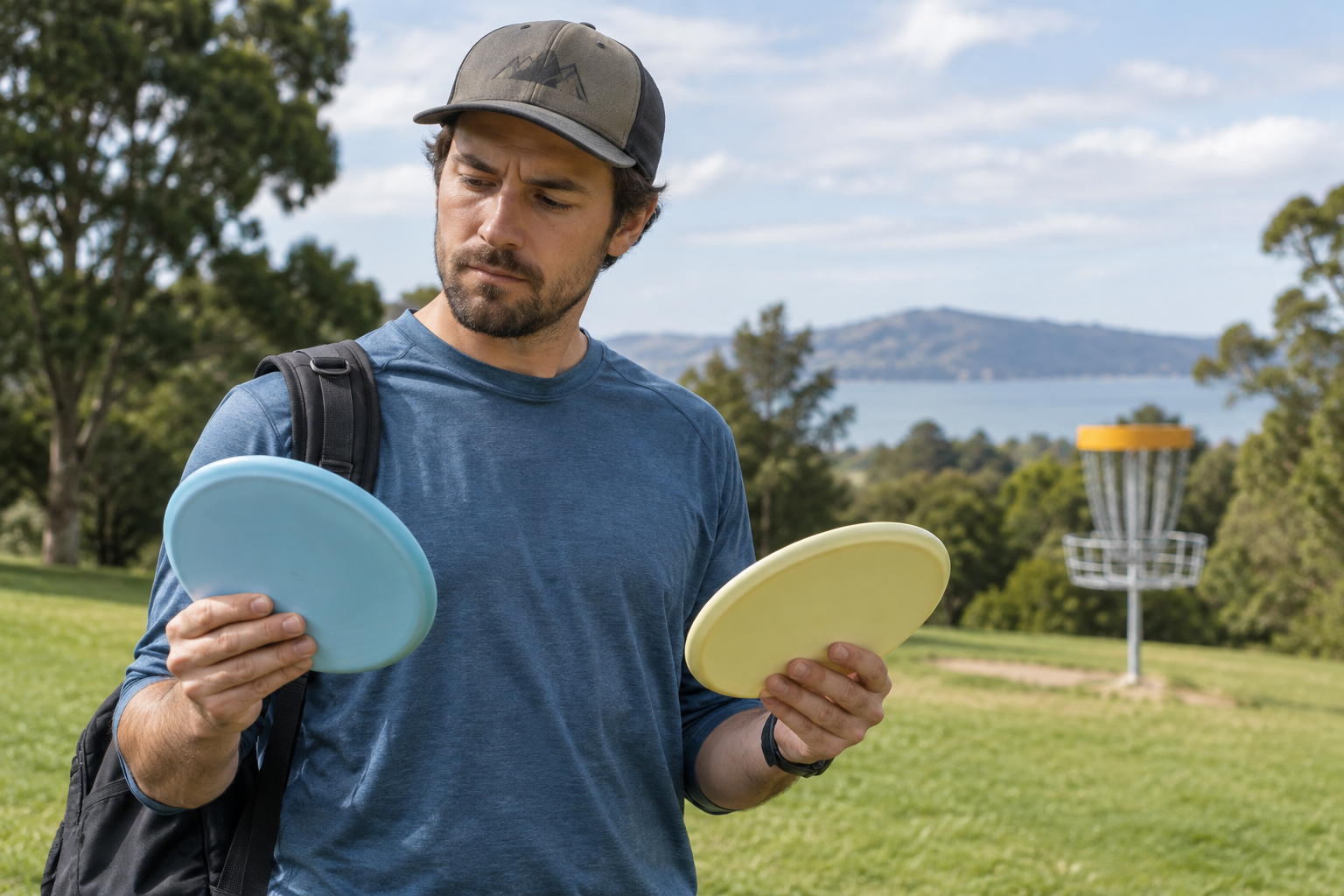
    The four numbers on a disc can look like a secret code when you are choosing gear. They are best treated as a quick guide to a disc’s intended flight, not a promise that it will fly exactly the same for every player. Your release speed, angle, spin and the conditions all affect what happens in the air.

    The common order is speed, glide, turn, fade. Discraft describes these as a breakdown of a disc’s characteristics, while also warning that the numbers are not perfect and that players can see different flights with the same disc. Here is a practical way to read them without getting lost in the jargon.

    1. Speed: how much throw the disc asks of you

    Speed is not a score for how far the disc will travel. It describes the disc’s design and the speed it generally needs to show its intended flight. Faster discs often have wider rims; they can be useful when your throw can match them, but a higher speed number does not automatically add distance.

    If a fast disc consistently seems to fade out early for you, that may be a sign that a slower disc is easier to get moving as intended. For a new player, comfort and control are more useful than buying the highest number in the shop.

    2. Glide: how long it tends to stay aloft

    Glide describes how much a disc tends to carry through the air. A higher glide rating can help a controlled throw stay aloft, while a lower-glide disc may feel easier to range or keep on a shorter line. Neither is universally better: a long open fairway and a tight approach ask for different things.

    Think of glide as a tendency, not extra power built into the disc. A nose-up throw, headwind or poor release angle can still make a high-glide disc stall or finish somewhere you did not plan.

    3. Turn: the early part of the flight

    Turn describes the disc’s tendency to move off its initial line during the faster, early part of flight. On many flight-number systems, turn is shown as a negative number; a more negative turn rating generally points to a greater tendency to turn when thrown with enough speed.

    For a right-handed backhand throw, that early movement is commonly to the right. Other throwing styles or handedness can reverse the direction you see, so learn the idea with your own familiar throw rather than memorising a picture without its context.

    4. Fade: the finish as the disc slows

    Fade describes the disc’s tendency to finish as it loses speed. In the common rating convention, a larger fade number suggests a stronger finishing movement. For a right-handed backhand throw, that finish is generally to the left; the direction changes with the spin orientation of the throw.

    Turn and fade work together. A disc may move one way early, then finish back the other way as it slows. The exact shape depends on the throw, so the printed pair is a clue to what to test—not a guarantee of a particular S-curve.

    How to use the numbers on your own discs

    1. Read the sequence. If the disc uses four flight numbers, identify speed, glide, turn and fade in that order.
    2. Make one change at a time. Compare discs you already own, rather than changing disc, grip and release angle all at once.
    3. Throw in a safe, open area. Use a controlled throw and note the wind and release angle so you have context for what you saw.
    4. Record the result. Write down the disc, throw style, approximate effort and where it finished. Your own notes will become more useful than a number alone.
    5. Choose for the shot. A disc that you can control reliably is often a better choice than one whose numbers look impressive.

    Flight ratings are assigned descriptions, not a substitute for throwing. Discraft specifically notes that arm speed, release angle and form can change how the same disc flies for different players. Weight, wear and wind are also useful things to keep in mind when comparing your own throws.

    So, next time you check a disc’s numbers, use them to form a simple expectation: how quickly it wants to fly, how much it may carry, how it may move early, and how it may finish. Then let a few calm, repeatable throws tell you whether that expectation fits your game.

    Sources: Discraft Support: What are these numbers on my disc? and PDGA: What Do the Numbers on a Disc Golf Disc Mean?.

    FAQs

    What do the four numbers on a disc golf disc mean?

    In the common sequence they refer to speed, glide, turn and fade: design speed, tendency to carry, early-flight movement and finishing movement.

    Does a higher speed number mean the disc will go farther?

    No. Speed is not a distance guarantee. The disc needs a throw that can produce its intended flight, and control matters as much as the rating.

    What does a negative turn number mean?

    In common flight-number conventions, a more negative turn rating indicates a greater tendency to move off the initial line during the early, faster part of flight when thrown with enough speed.

    What is the difference between turn and fade?

    Turn describes the early part of flight; fade describes the disc’s tendency to finish as it slows. The directions you see depend on the spin orientation of your throw.

    Will the same disc fly the same way for every player?

    No. Discraft notes that arm speed, release angle and form can change the flight a player gets from the same disc.

    How can I learn what a disc’s numbers mean for my game?

    Throw it in a safe open area, change one variable at a time, and record the throw style, conditions and finish so you can compare results fairly.

  • Plan a six-station beginner disc golf intro day

    Plan a six-station beginner disc golf intro day

    A beginner does not need a full bag, a perfect backhand or a competition-sized event to enjoy disc golf. A short introduction with simple stations can give new players a first taste of throwing, putting, course etiquette and the fun of playing together.

    This six-station format is designed for a club, school, workplace group, community day or friends’ gathering. It follows the spirit of NZDG’s beginner guidance: disc golf can be played in shared public spaces, does not require much equipment, and players with different skill levels can take part together.

    Start with a simple plan

    Choose a safe, accessible park or course and keep the first session short. If you are organising a public or club event, read NZDG’s event-planning guidance before setting a date. It highlights the need to consider capacity, permissions and safety, and recommends checking the calendar so your event does not clash with a larger tournament nearby.

    For equipment, aim for one beginner-friendly disc per person where possible, with a few spare discs available. A beginner does not need a specialised collection; NZDG’s starter information says one to three discs can be enough to begin. Mark practice areas with plain cones or visible objects, and keep throws directed into open space.

    The six stations

    1. Welcome and the basic idea

    Start with a five-minute explanation: players throw from a tee towards a basket, then throw again from where the disc comes to rest. The aim is to complete the hole in as few throws as possible. Show the group how to stand behind the disc, wait for the area ahead to be clear, and take turns.

    Keep the introduction visual. Hold up a putter or mid-range disc, point out the basket and demonstrate one relaxed throw. New players have enough to take in without a long rules lecture.

    2. Grip and flat release

    Give each person a comfortable grip and one simple throwing cue: keep the motion smooth and finish with the disc on a predictable angle. Let beginners make short throws into a wide target area rather than chasing distance.

    Volunteers should demonstrate once, then watch for one useful adjustment at a time. Avoid rebuilding someone’s entire technique during their first ten minutes with a disc.

    3. Putting into the basket

    Set up a short putting station with several discs and a clear throwing line. Begin close to the basket so everyone can experience a successful putt, then let players step back if they want a challenge.

    Use a small game such as “make two out of five” or “choose your own distance”. The point is to learn the target and a repeatable motion, not to create a leaderboard.

    4. Throwing to a landing zone

    Mark a broad landing zone with cones. Ask players to throw a controlled shot that finishes anywhere inside it. This introduces the idea that good disc golf is often about choosing a useful landing area rather than simply throwing as far as possible.

    Offer a shorter line for anyone who is new or unsure. Keep groups spaced out and only retrieve discs when the throwing area is safe.

    5. Etiquette and safety

    Make this station practical rather than formal. Demonstrate waiting until the fairway is clear, standing well away from another player’s swing, watching where discs land, helping with searches and keeping bags or drink bottles out of throwing lanes.

    Because many courses share public parks, remind the group to give way to walkers and other park users. Organisers should also check the venue’s permissions and identify any roads, paths, water or other hazards before the session starts.

    6. A short team mini-hole

    Finish with a short hole or reduced layout. Put beginners in small groups with a supportive player or volunteer, and let each person complete the hole from a suitable tee or marked start point.

    Keep the scoring optional. A simple “best moment of the hole” debrief can be more welcoming than comparing totals. Ask what felt comfortable, what surprised them and which station they would try again.

    Make the day welcoming

    Use plain language, offer more than one throwing distance and make it clear that nobody needs to be athletic or experienced to join in. Avoid making a new player throw in front of a crowd if they would rather practise with a partner.

    Plan for weather, water and shade. Give volunteers defined jobs such as greeting, demonstrating, spotting throws, managing discs and checking that the next group is ready. A simple timetable might allow ten minutes at each station, a short break, then twenty minutes for the mini-hole.

    End with a clear next step: share the local course, club night, beginner session or official course finder. NZDG’s guidance notes that disc golf can be played informally, in leagues and in tournaments, so a first intro day can lead to whatever level of involvement suits the player.

    A repeatable community format

    The best part of this idea is that it can be repeated. Keep the cones, spare discs, short briefing and station cards together in a club tub. After each session, note which station ran long, which explanation confused people and what beginners asked most often.

    That feedback gives the next intro day a better starting point without turning it into a complicated programme. A welcoming first experience is a practical way for a club, school or community group to help more people discover disc golf in Aotearoa.

    Sources: NZDG: What do I need to start? and NZDG: Run an event?.

    FAQs

    Who could run a beginner disc golf intro day?

    A local club, school, workplace, community group or group of friends could use this format, provided the venue is suitable and any required permissions are arranged.

    How much equipment does a beginner need?

    Not much. One suitable disc per person plus a few spares is enough for an introduction, and NZDG’s starter guidance says one to three discs can be enough to begin.

    How long should the six-station session take?

    A practical starting point is about ten minutes per station, followed by a short break and a twenty-minute mini-hole, with flexibility for the group.

    What should the safety briefing cover?

    Cover waiting until the throwing area is clear, standing safely near other players, watching discs, helping with searches and giving way to other park users.

    Should beginners keep score?

    Scoring can be optional. A short mini-hole can focus on learning and confidence, with scores added only if the group wants them.

    How can players continue after the intro day?

    Share a local course, club session, beginner event or the official NZDG course and club resources so each player can choose a comfortable next step.

  • The five-metre rule: what counts as a practice throw in disc golf

    The five-metre rule: what counts as a practice throw in disc golf

    One of the easiest disc golf rules to misunderstand is the practice throw. A player may casually toss a disc back to a mate, test a putt after finishing a hole, or make an extra throw while thinking through a line. Those actions can look harmless, but the rule depends on what the throw is for and how far it travels through the air.

    The PDGA’s Rule 809.03 gives the basic definition: a practice throw is a throw that is not made as a competitive attempt to change the lie, with limited exceptions for short returns. The practical takeaway is simple: during an organised round, do not make extra throws casually unless you know they fit the rule.

    The five-metre test

    Under the current rule, a throw to return a disc to a player, or to set aside an unused disc, is not a practice throw when it travels less than five metres in the air. That is the familiar short-toss exception.

    Five metres is measured through the air, not by the distance the disc rolls after landing. A soft toss that travels three metres in the air and then skips or rolls further is treated differently from a throw that flies more than five metres. If the throw is longer than five metres and is not a competitive attempt, it can be a practice throw regardless of why you made it.

    Common situations on the course

    Returning a disc to a group member

    If a player is a few steps away, a gentle return toss may fall within the short-distance exception. If they are much farther away, walk the disc over or hand it back instead of throwing it. That removes the guesswork and avoids creating an unnecessary rules problem.

    Putting again after holing out

    Once you have completed the hole, an extra putt is not part of your competitive attempt. The PDGA’s rules guidance treats a non-competitive throw as a practice throw. If you want to keep your putting stroke warm, wait until the round is over or use a designated practice area and follow the event’s instructions.

    Tossing a disc back to your bag

    A short toss to set aside an unused disc can fit the same exception when it travels less than five metres in the air. If your bag is farther away, carry the disc instead. It is a tiny change of habit that keeps the round clean.

    Dropping a disc

    A drop is not a practice throw. That does not make every deliberate extra throw a drop, though. If you propel the disc through the air as a non-competitive throw, the practice-throw rule is the safer reference point.

    What is the penalty?

    The practice throw itself is disregarded, and the player receives one penalty throw. In practical terms, the throw does not become a new lie for your next competitive shot, but the penalty can still affect your score.

    If there is uncertainty, stop and ask your group or the event official before making the extra throw. A quick question is easier to resolve than trying to reconstruct what happened after the disc has travelled away from the group.

    Do not confuse practice throws with provisional throws

    A provisional throw is a different tool. The PDGA’s Rule 809.02 allows a provisional sequence in specific situations, such as when it is unclear how to proceed under the rules or when a player intends to appeal a ruling. The player must clearly declare that a provisional sequence is starting, explain why, and explain which sequence will apply to each possible outcome.

    That declaration matters. An extra throw made without following the provisional-throw requirements may be treated as a practice throw. If you think you need a provisional, say so in a way everyone in the group can understand before making the throw.

    A simple habit for casual and tournament rounds

    Use this three-question pause before any throw that is not obviously your next competitive shot:

    1. Is this throw intended to change my lie? If yes, it is part of playing the hole. If no, continue the check.
    2. Am I only returning or setting aside a disc? If so, keep the throw under five metres through the air, or simply carry it.
    3. Could another player misunderstand what I am doing? If yes, explain it first or ask an official.

    For everyday rounds, carrying the disc is usually the easiest option. In a competition, follow the published event rules and ask the tournament director or official when the situation is unclear. The goal is not to make players nervous about every small movement; it is to keep non-competitive throws from becoming an avoidable scoring issue.

    Sources: PDGA Rule 809.03: Practice Throw and PDGA Rule 809.02: Provisional Throw.

    FAQs

    What is a practice throw in disc golf?

    It is a throw that is not made as a competitive attempt to change the lie, apart from the specific short-return exceptions in the rule.

    How far can I toss a disc back to a player without it being a practice throw?

    The throw must travel less than five metres in the air when it is made to return a disc to a player.

    Does the five-metre rule measure the roll after the disc lands?

    No. The relevant distance is how far the disc travels through the air. A later skip or roll does not change that measurement.

    Is an extra putt after finishing a hole a practice throw?

    It can be. Once the hole is complete, an extra non-competitive putt is not part of changing your lie, so the practice-throw rule applies.

    What is the penalty for a practice throw?

    The practice throw is disregarded and the player receives one penalty throw.

    How do I make a provisional throw correctly?

    Clearly declare that you are starting a provisional sequence, explain why, and explain which sequence will apply to each possible ruling before throwing.

  • Aotearoa disc golf events to put on your spring calendar

    Aotearoa disc golf events to put on your spring calendar

    Spring is bringing a busy stretch of disc golf events around Aotearoa. The New Zealand Disc Golf (NZDG) event calendar currently lists tournaments and gatherings from Hastings and Te Kūiti through to Tasman, Taupō and beyond.

    If you are looking for a reason to travel, watch a tournament, volunteer or simply play somewhere new, these are a few dates worth putting on your radar. Event details can change, so check the official NZDG website and the organiser’s event page before you leave home.

    Flaxmere Fling — Hastings, 19 September

    The nearest event on the current calendar is Flaxmere Fling 2026, listed for Saturday 19 September at Flaxmere Disc Golf in Flaxmere Park, Hastings. NZDG lists the event from 7:00 am to 5:30 pm and provides a registration link from the event listing.

    For players, a local event like this can be a friendly way to experience organised disc golf without making the weekend too complicated. If you are entering, confirm your division, arrival time and registration details before travelling. If you are spectating or supporting a mate, allow time to park, find the course and stay clear of groups during play.

    Brook Park Brave — Te Kūiti, 26–27 September

    The next listed event is the 2026 Brook Park Brave at Brook Park, Te Kumi Side Road, Te Kūiti. The NZDG calendar shows it running from Saturday 26 September into Sunday 27 September.

    The listing gives a Saturday 7:00 pm start and a Sunday 11:00 pm finish. Those times are unusual enough that anyone planning a trip should confirm the schedule directly with the organiser before booking accommodation or setting off. It is a good reminder that an event title and date range are not a substitute for checking the latest player information.

    Two October options: Tasman or Taupō

    On the weekend of 24–26 October, the calendar currently shows two substantial options:

    • Moturoa Open 2026 — NZDG South Island Championships: listed at Moturoa / Rabbit Island in the Tasman region, from Saturday 24 October to Monday 26 October.
    • Taupo Thermal Throwdown: listed at Spa Thermal Park in Taupō, also from Saturday 24 October to Monday 26 October.

    These events offer a simple choice for a spring road trip: head towards the top of the South Island for the Moturoa / Rabbit Island weekend, or make a central North Island plan around Spa Thermal Park. Before committing, check the event page for registration status, divisions, fees, local rules and the expected playing schedule.

    How to plan an event trip without making it stressful

    A tournament weekend is easier when the practical details are sorted before the first throw:

    1. Save the official listing. Use the current NZDG calendar and the organiser’s own event page as your reference point.
    2. Confirm the basics. Check the date, venue, start time, registration instructions and whether the event is full.
    3. Plan for the course. Pack water, weather layers, comfortable shoes, a small towel and the discs you can throw reliably.
    4. Allow extra travel time. A new venue may have a different entrance, parking arrangement or walking route to the first tee.
    5. Read the player information. Local rules, check-in times and course layout notes can affect how you prepare.

    If you are not ready to enter, you can still use the calendar to discover courses, follow results, meet local players or find a club. A well-run event is part competition and part community noticeboard: it shows where people are playing and gives newcomers a clear way into the sport.

    Keep the calendar handy

    The NZDG listing also includes later events such as TDGA Presents Xtreme at McLaren Falls, Faultline Fury at Harcourt Park, Temuka Tussle, MoonBase XII in Twizel and the 2027 New Zealand National Disc Golf Championships in Christchurch. The exact details will matter closer to each date, but keeping a regular eye on the calendar is a useful habit for players who want to plan ahead.

    For this week, the practical takeaway is simple: start with the event closest to you, confirm the details from the official listing, and treat the trip as a chance to connect with the local disc golf community. Spring is a good time to add a new course or a new group of players to your map.

    Source: New Zealand Disc Golf (NZDG) official website and current upcoming-events listing.

    FAQs

    What disc golf event is listed first on the current NZDG calendar?

    Flaxmere Fling 2026 is listed first, on Saturday 19 September at Flaxmere Disc Golf in Flaxmere Park, Hastings.

    Where is the 2026 Brook Park Brave being held?

    It is listed at Brook Park on Te Kumi Side Road in Te Kūiti, with the event running from 26 to 27 September 2026.

    Which two events are listed for 24–26 October 2026?

    The current listing shows Moturoa Open 2026 at Moturoa / Rabbit Island in the Tasman region and Taupo Thermal Throwdown at Spa Thermal Park in Taupō.

    Should I rely on the times shown in a calendar listing?

    Use them as a starting point, then confirm the latest schedule with the event organiser, especially when the listed start or finish time is unusual.

    What should I check before travelling to a disc golf event?

    Confirm the venue, date, start time, registration instructions, event capacity, player information, local rules and any parking or access details.

    Can I use the NZDG calendar if I am not entering a tournament?

    Yes. The calendar can help you find events to watch, courses to visit, clubs to contact and opportunities to meet other players.

  • PDGA forms officiating task force after Worlds call controversy

    PDGA forms officiating task force after Worlds call controversy

    The Professional Disc Golf Association has announced a new officiating task force following controversy around a stance-violation call during the final MPO round of the 2026 PDGA Professional Disc Golf World Championship. For players in Aotearoa who follow sanctioned events, the important point is that this is a process review, not a replay of the decision.

    In its 9 September 2026 announcement, the PDGA said it wants to review and clarify how officiating works at elite and Major-level events. The organisation said the task force will look at making rules and procedures clearer, more consistent and easier for players, officials and fans to understand.

    What has the PDGA announced?

    The task force is being chaired by Conrad Damon, the newly elected President of the PDGA Board of Directors, and Doug Bjerkaas, the PDGA Executive Director. The PDGA said additional members would be named in the following week, including representatives from the DGPT Players Council, disc golf media and the PDGA Rules & Regulations Advisory Committee.

    That mix matters because officiating affects several groups at once. Players need to know what is expected of them. Officials need a process they can apply consistently. Tournament directors need procedures that are clear enough to support decisions under pressure. Fans also need to understand why a ruling was made, especially when a high-profile call changes the feel of a final round.

    What the task force is not doing

    The PDGA has been explicit that the task force will not review or revisit the outcome of the 2026 Worlds final round. The ruling stands. The announced work is forward-looking: it is intended to examine the approach to officiating and recommend improvements for future events.

    That distinction is useful for everyday players. A review of a process does not automatically change a scorecard, overturn a past decision or create a new appeal route for an event that has already finished. Any future changes will depend on the task force’s recommendations and whatever the PDGA decides to publish after the review is complete.

    Why this matters beyond elite events

    Most rounds in New Zealand are casual, club-based or local competitions rather than PDGA Major events. Even so, clear decision-making helps any organised round. Before a tournament starts, players and organisers can reduce confusion by making sure everyone knows which rules apply, who is acting as an official, and how a question should be raised.

    A calm process also protects the tone of the sport. A player can disagree with a call without turning the group into an argument. An official can explain the decision and record the relevant facts. A tournament director can focus on applying the event’s published procedures rather than sorting out a dispute that has become personal.

    This does not mean every club round needs a complicated bureaucracy. It means the event should make its expectations visible before the first tee time. For a small competition, that might be a short briefing covering local rules, out-of-bounds areas, how to request an official ruling and who has final authority for the day.

    A practical checklist for local organisers

    While the PDGA review is underway, local tournament directors can still make their own events easier to follow:

    • Publish the event rules early. Point players to the governing rules and list any event-specific conditions in plain language.
    • Identify officials. Let players know who can make a ruling and how to contact the tournament director if an issue needs to be escalated.
    • Explain the timing. Tell players to raise a question promptly, before the group moves too far from the situation.
    • Keep facts separate from frustration. Note the lie, throw, marker, boundary or other relevant detail before debating what should happen next.
    • Record unusual rulings. A short written note helps with results, later questions and improvements for the next event.

    For players, the matching checklist is simple: know the local rules, ask early, explain the situation clearly and listen to the ruling before deciding what to do next. If you are unsure how your event handles a disputed call, ask the organiser at the player briefing rather than waiting for a stressful moment on the course.

    What happens next?

    The PDGA says it will share the task force’s recommendations and any resulting changes when the review is complete. Until then, the current published rules and event procedures remain the reference point for sanctioned play. The task force announcement is therefore best read as a sign that the sport’s governing body is taking officiating clarity seriously, not as an immediate rule change.

    For the New Zealand disc-golf community, that is a useful conversation to have at every level. Good officiating is not about removing all disagreement from sport. It is about giving players and organisers a fair, understandable way to handle disagreement when it appears.

    Source: PDGA Board of Directors Forms Officiating Task Force, published 9 September 2026.

    FAQs

    Why did the PDGA form an officiating task force?

    The PDGA formed it to review and clarify its approach to officiating at elite and Major-level events after controversy around a stance-violation call at the 2026 World Championship.

    Will the task force change the result of the 2026 Worlds final round?

    No. The PDGA said the task force will not revisit that outcome and that the ruling stands.

    Who is leading the PDGA officiating task force?

    It is chaired by Conrad Damon, President of the PDGA Board of Directors, and Doug Bjerkaas, the PDGA Executive Director.

    Who else is expected to be represented?

    The PDGA said additional members would include representatives from the DGPT Players Council, disc golf media and the PDGA Rules & Regulations Advisory Committee.

    Does the announcement immediately change the rules for local New Zealand rounds?

    No. The announcement describes a forward-looking review. Players should continue to follow the rules and event procedures published for their particular competition.

    What can a local tournament organiser do now?

    An organiser can publish event rules early, identify officials, explain how questions are raised, ask players to report issues promptly and keep a short record of unusual rulings.

  • A five-step wind check for calmer disc golf rounds

    A five-step wind check for calmer disc golf rounds

    A disc that flies predictably on a calm practice field can behave very differently when a gust catches it halfway down a fairway. The answer is not always to throw harder or reach for a more specialised disc. A reliable first step is to slow the decision down: notice the wind, choose a forgiving line, and plan where you are happy for the disc to finish.

    This five-step wind check is designed for everyday rounds, including exposed parks and coastal layouts around Aotearoa. It is a practical routine rather than a promise that you can control every gust. Wind is variable, and a safe, simple shot is often a better choice than trying to force a perfect flight.

    1. Check more than the flag at the tee

    Before you throw, look at grass, leaves, flags and the tops of nearby trees. These clues can disagree because they sit at different heights and may be sheltered differently. A flag near the car park may not tell you what the air is doing above an open fairway.

    Notice the wind at the tee, then look toward the landing area. If the clues suggest the direction is changing or swirling, treat the shot as less predictable. A weather forecast can give useful background, but your immediate surroundings tell you what is happening on this particular hole.

    2. Think about how the air meets the disc

    Wind direction matters, but so does the disc’s angle as it flies. A breeze that catches the underside of a tilted disc can lift or move it; air over the top can press it down. This is one reason a crosswind can produce a surprising result when the disc banks or turns during flight.

    For a practical check, imagine the disc’s flight plate as it travels along your planned line. Ask: if the wind shifts, which edge might it catch? This is more useful than thinking only “left wind” or “right wind”. For right- and left-handed throws, the likely flight shape can differ, so use your own familiar throw as the reference rather than copying a generic direction chart.

    The Professional Disc Golf Association’s wind explainer discusses how wind affects lift, drag and the disc’s angle of attack. Its central lesson for everyday players is that wind can change flight significantly, so expect your usual release and disc choice to behave differently rather than assuming the same result as a calm-day throw.

    3. Choose a forgiving line and landing area

    On a windy hole, choose a landing area before you choose a heroic distance target. Look for space that leaves a manageable next shot and avoids the worst trouble. If one side of the fairway has deep rough, a boundary or a steep slope, give yourself room away from it.

    Then choose a line that leaves margin for uncertainty. You might aim at a broad gap instead of a narrow one, or accept a shorter placement throw rather than trying to reach the basket in one. A safer miss is part of the plan, not a failure of ambition.

    Do not automatically change to a faster or more overstable disc just because it is breezy. The right choice depends on your throw, the wind angle, the available space and the flight you can repeat. When unsure, use a familiar disc and a controlled throw, and leave enough room for a less-than-perfect result.

    4. Make the throw simpler, not stronger

    Trying to overpower the wind can make timing and angle harder to repeat. Instead, pick one clear cue: a controlled reach, a comfortable release angle, or a lower line if the fairway allows it. Avoid stacking several technical thoughts just as you step onto the tee.

    Keep the intended finish in mind. If a gust pushes the disc away from your ideal line, a predictable landing zone still gives you a chance to recover. The goal is to make a decision you can commit to, not to win an argument with the weather.

    5. Plan the approach and putt for the same conditions

    Wind still matters after the drive. Before an approach, check whether the basket area is sheltered or exposed. A soft landing might be useful in one spot, while a ground-level skip or roll could create extra trouble somewhere else. Choose an approach that finishes in a place where you feel comfortable taking the next shot.

    For putting, pause long enough to notice whether the wind is steady or gusting. If the putt feels low-percentage, a controlled lay-up may be a sensible play, particularly when a miss could travel well past the basket or toward a hazard. There is no single rule that makes every windy putt safe; use the conditions and your own reliable range.

    A pocket-sized wind notes card

    Use this quick card before a breezy hole. You can print it from the page or copy the prompts into a notebook.

    WIND NOTES — DISC GOLF
    
    Hole: __________    Wind at tee: ______________________
    Wind near landing area: _______________________________
    What can the wind catch on my disc? __________________
    Safe landing zone: ____________________________________
    Miss I can live with: _________________________________
    Approach / putt plan: _________________________________
    One cue for this throw: ______________________________

    After the hole, write one short note about what happened. “Crosswind gust lifted the outside edge near the trees” is more useful than “wind was bad”. Over several visits, these small observations can help you make better choices at that course without pretending the wind will repeat exactly.

    Keep the routine quick

    A good wind check should take a few seconds, not hold up the group. Look at the conditions, pick the safe side, choose one cue and throw when ready. If the wind is too erratic for the shot you wanted, change the plan before you step into your motion.

    The biggest improvement may simply be avoiding a chain of ambitious choices: a risky drive, a difficult recovery and a low-percentage putt. On a gusty day, a sensible landing zone and a calm next shot can be a very good result.

    Source: The Professional Disc Golf Association’s wind explainer describes how wind influences disc flight through lift, drag and angle of attack. The tips here are practical decision prompts, not a substitute for learning your own throws in different conditions.

    FAQs

    How do I check the wind before a disc golf throw?

    Look at several nearby clues, such as grass, leaves, flags and trees, and compare the tee with the landing area. Local shelter and height can make the wind feel different across one hole.

    Why can a crosswind move a disc unexpectedly?

    A crosswind can meet different parts of the disc as it banks or changes angle in flight. The effect depends on the wind direction and the disc’s orientation, not just whether the wind is coming from your left or right.

    Should I always use a more overstable disc in wind?

    No. Disc choice depends on the throw, wind angle, available space and your familiarity with the disc. When uncertain, a controlled shot with a familiar disc may be easier to plan than a last-minute equipment change.

    Is it better to throw harder into a headwind?

    Not necessarily. Trying to overpower a gust can make your timing and release less consistent. Choose a controllable line and a landing area with room for error.

    What should I do if the wind is swirling near the basket?

    Treat the finish as less predictable, choose an approach that leaves a comfortable next shot, and consider a lay-up if the putt feels low-percentage or a long miss would create trouble.

    What should I write on a disc golf wind-notes card?

    Record the wind at the tee and landing area, the safe landing zone, a miss you can accept, your approach or putt plan, and one simple cue for the throw.

  • Free printable: a simple disc golf course-notes sheet for better rounds

    A new disc golf course can feel like a puzzle. You are trying to work out the lines, the wind, the landing zones, the out-of-bounds areas and the safest way to reach the basket — all while a group waits behind you and your first throw is already in your hand.

    A simple course-notes sheet gives you somewhere to put those decisions. It also helps you notice patterns instead of relying on a vague memory of whether a hole felt hard. You do not need a detailed survey, a perfect map or a bag full of specialist discs. You need a few useful observations that make your next shot easier to plan.

    Why course notes are worth keeping

    Most players remember the dramatic parts of a round: the tree kick, the long putt, the disc that disappeared in the rough. Those moments are memorable, but they are not always the information that will help next time.

    Good notes capture repeatable details:

    • where the safest landing area is;
    • which side of the fairway gives you the clearest next shot;
    • how the wind behaves at tee height and near the basket;
    • where a missed shot is likely to finish;
    • what distance or shape you actually faced, rather than what you hoped to throw.

    The aim is not to make a casual round feel like homework. The aim is to reduce decision fatigue. When you return to the course, you can spend less time guessing and more time committing to a sensible plan.

    Use the sheet in three passes

    Pass one: before the first throw

    Walk to the tee and look at the whole hole before choosing a disc. Write down the basic shape: open, wooded, uphill, downhill, tight, wide or mixed. Then identify the first decision that matters. It might be a low ceiling, a turning fairway, a slope beside the basket or a road that you need to avoid.

    Do not try to predict every bounce. Pick one conservative landing zone that leaves you a clear second shot. If you are playing a new course, a controlled first throw is often more useful than a high-risk attempt at the perfect line.

    Pass two: after the drive

    Once your disc has stopped, note what the hole actually gave you. Was the landing zone as generous as it looked from the tee? Did the fairway play narrower than expected? Did the wind push the disc earlier, later or more strongly than you planned?

    Record the useful adjustment in plain language. “Start wider” is better than a paragraph about the throw. “Keep the miss left” is better than writing down every tree you saw. Your future self needs a decision, not a transcript.

    Pass three: after the hole

    When the hole is complete, give it one quick rating for risk and one for confidence. A hole can be difficult but predictable, or easy-looking but full of awkward misses. Those are different problems and deserve different plans.

    Finish with one sentence: “Next time I will…” Examples include “throw a slower disc,” “lay up before the slope,” “aim at the gap, not the basket,” or “check the wind again near the green.” That sentence becomes the most valuable part of the note.

    What to record on each hole

    Keep the sheet small enough to use while you play. These are the fields that earn their space.

    Hole shape

    Use a short label such as straight, gentle hyzer, turning, tunnel, open or split fairway. The label is a prompt to remember the intended flight, not a technical classification.

    First landing zone

    Mark the part of the fairway where you want your opening throw to finish. On a long hole, this may be a broad area rather than a single spot. Choosing it before you throw keeps the plan focused on position.

    Preferred miss

    Every hole has a miss that leaves a better recovery than the others. Write left, right, short, long or centre, then add a few words if needed: “short is safer than long” or “right side blocks the upshot.” This is especially helpful when the basket is near a boundary, steep bank or dense rough.

    Wind and elevation

    You do not need a detailed weather record. Note what you felt: headwind, tailwind, crosswind, swirling, uphill or downhill. If the wind changes during the round, update the note rather than treating the first observation as permanent.

    Next-shot shape

    Write down what the second shot needs to do. It might need to finish flat, stay below branches, avoid skipping or land softly. This helps you choose a disc for the shot you need, not simply the disc you threw well on the previous hole.

    How to turn notes into a better plan

    After the round, look for repeated decisions rather than isolated mistakes. If three holes punished early turn, the lesson may be about release angle or disc selection. If several approaches finished long, the lesson may be about height and ground play. If putting felt difficult, check whether your approach shots were routinely leaving awkward distances.

    Choose only one or two changes for your next round. A long list can make you play cautiously without making you play better. A focused adjustment is easier to remember under pressure.

    You can also separate course notes from technique notes. “Use a wider starting line on hole 6” is course information. “Keep the reach-back level” is a throwing cue. Both are useful, but mixing them together can make the page harder to use when you are standing on the tee.

    Free printable course-notes sheet

    You can print this section directly from your browser or save it as a PDF for your next round. If you prefer paper, use one line per hole and keep the sheet on a clipboard or in a clear sleeve.

    DISC GOLF COURSE NOTES
    
    Course: __________________________   Date: _______________
    Round goal: ______________________________________________
    
    Hole | Shape | Landing zone | Preferred miss | Wind/elevation | Next-shot shape | Score
    -----|-------|---------------|-----------------|-----------------|------------------|------
      1  |       |               |                 |                 |                  |      
      2  |       |               |                 |                 |                  |      
      3  |       |               |                 |                 |                  |      
      4  |       |               |                 |                 |                  |      
      5  |       |               |                 |                 |                  |      
      6  |       |               |                 |                 |                  |      
      7  |       |               |                 |                 |                  |      
      8  |       |               |                 |                 |                  |      
      9  |       |               |                 |                 |                  |      
    
    One thing to repeat: ______________________________________
    One thing to change: ______________________________________

    For formal competition, keep score in the way required for your event. The current PDGA rules explain how scores are recorded and reconciled; the course-notes sheet is a planning aid, not a replacement for the official scorekeeping process.

    Make the sheet work for your group

    Different players can use the same layout in different ways. A beginner may only need the landing zone, preferred miss and score. A more experienced player may add a second landing option, a skip note or a wind reminder. A club can use the sheet to collect feedback after a new layout is installed.

    If you are playing with friends, agree that notes are for learning rather than judging. Share a useful observation when someone asks, but let each player make their own decision. The best course notes create confidence without turning a casual round into a lecture.

    The takeaway

    A course-notes sheet is a tiny tool with a useful job: it turns a round into information you can use again. Record the landing zone, the preferred miss, the wind, the next-shot shape and one clear adjustment. Keep the notes short, review them before your next visit, and update them when the course or conditions change.

    Better rounds rarely come from remembering everything. They come from remembering the few decisions that matter.

    Source note: For the formal scoring principles referenced above, see the PDGA Official Rules, section 808 Scoring.

    FAQs

    What is a disc golf course-notes sheet?

    It is a simple planning page for recording useful details about each hole, such as the landing zone, preferred miss, wind, elevation and next-shot shape.

    Do I need course notes to play disc golf?

    No. You can play without them. Notes are useful when you want to learn a new course, make more consistent decisions or remember what worked on a previous visit.

    What should I write down first?

    Start with the hole shape, a sensible first landing zone and the safest useful miss. These details help you plan the opening throw before adding more information.

    Should I record every bad throw?

    No. Record patterns and decisions that can change next time. A short adjustment such as “start wider” is usually more useful than a detailed account of one unlucky bounce.

    Can beginners use the printable sheet?

    Yes. Beginners can keep it simple by using the landing-zone, preferred-miss and score fields, then add wind or next-shot notes as they become more comfortable.

    Does a course-notes sheet replace an official scorecard?

    No. It is a planning and learning aid. In formal competition, follow the event’s scoring process and the applicable official rules.

  • Free printable: a simple disc golf course-notes sheet for better rounds

    A new disc golf course can feel like a puzzle. You are trying to work out the lines, the wind, the landing zones, the out-of-bounds areas and the safest way to reach the basket — all while a group waits behind you and your first throw is already in your hand.

    A simple course-notes sheet gives you somewhere to put those decisions. It also helps you notice patterns instead of relying on a vague memory of whether a hole felt hard. You do not need a detailed survey, a perfect map or a bag full of specialist discs. You need a few useful observations that make your next shot easier to plan.

    Why course notes are worth keeping

    Most players remember the dramatic parts of a round: the tree kick, the long putt, the disc that disappeared in the rough. Those moments are memorable, but they are not always the information that will help next time.

    Good notes capture repeatable details:

    • where the safest landing area is;
    • which side of the fairway gives you the clearest next shot;
    • how the wind behaves at tee height and near the basket;
    • where a missed shot is likely to finish;
    • what distance or shape you actually faced, rather than what you hoped to throw.

    The aim is not to make a casual round feel like homework. The aim is to reduce decision fatigue. When you return to the course, you can spend less time guessing and more time committing to a sensible plan.

    Use the sheet in three passes

    Pass one: before the first throw

    Walk to the tee and look at the whole hole before choosing a disc. Write down the basic shape: open, wooded, uphill, downhill, tight, wide or mixed. Then identify the first decision that matters. It might be a low ceiling, a turning fairway, a slope beside the basket or a road that you need to avoid.

    Do not try to predict every bounce. Pick one conservative landing zone that leaves you a clear second shot. If you are playing a new course, a controlled first throw is often more useful than a high-risk attempt at the perfect line.

    Pass two: after the drive

    Once your disc has stopped, note what the hole actually gave you. Was the landing zone as generous as it looked from the tee? Did the fairway play narrower than expected? Did the wind push the disc earlier, later or more strongly than you planned?

    Record the useful adjustment in plain language. “Start wider” is better than a paragraph about the throw. “Keep the miss left” is better than writing down every tree you saw. Your future self needs a decision, not a transcript.

    Pass three: after the hole

    When the hole is complete, give it one quick rating for risk and one for confidence. A hole can be difficult but predictable, or easy-looking but full of awkward misses. Those are different problems and deserve different plans.

    Finish with one sentence: “Next time I will…” Examples include “throw a slower disc,” “lay up before the slope,” “aim at the gap, not the basket,” or “check the wind again near the green.” That sentence becomes the most valuable part of the note.

    What to record on each hole

    Keep the sheet small enough to use while you play. These are the fields that earn their space.

    Hole shape

    Use a short label such as straight, gentle hyzer, turning, tunnel, open or split fairway. The label is a prompt to remember the intended flight, not a technical classification.

    First landing zone

    Mark the part of the fairway where you want your opening throw to finish. On a long hole, this may be a broad area rather than a single spot. Choosing it before you throw keeps the plan focused on position.

    Preferred miss

    Every hole has a miss that leaves a better recovery than the others. Write left, right, short, long or centre, then add a few words if needed: “short is safer than long” or “right side blocks the upshot.” This is especially helpful when the basket is near a boundary, steep bank or dense rough.

    Wind and elevation

    You do not need a detailed weather record. Note what you felt: headwind, tailwind, crosswind, swirling, uphill or downhill. If the wind changes during the round, update the note rather than treating the first observation as permanent.

    Next-shot shape

    Write down what the second shot needs to do. It might need to finish flat, stay below branches, avoid skipping or land softly. This helps you choose a disc for the shot you need, not simply the disc you threw well on the previous hole.

    How to turn notes into a better plan

    After the round, look for repeated decisions rather than isolated mistakes. If three holes punished early turn, the lesson may be about release angle or disc selection. If several approaches finished long, the lesson may be about height and ground play. If putting felt difficult, check whether your approach shots were routinely leaving awkward distances.

    Choose only one or two changes for your next round. A long list can make you play cautiously without making you play better. A focused adjustment is easier to remember under pressure.

    You can also separate course notes from technique notes. “Use a wider starting line on hole 6” is course information. “Keep the reach-back level” is a throwing cue. Both are useful, but mixing them together can make the page harder to use when you are standing on the tee.

    Free printable course-notes sheet

    You can print this section directly from your browser or save it as a PDF for your next round. If you prefer paper, use one line per hole and keep the sheet on a clipboard or in a clear sleeve.

    DISC GOLF COURSE NOTES
    
    Course: __________________________   Date: _______________
    Round goal: ______________________________________________
    
    Hole | Shape | Landing zone | Preferred miss | Wind/elevation | Next-shot shape | Score
    -----|-------|---------------|-----------------|-----------------|------------------|------
      1  |       |               |                 |                 |                  |      
      2  |       |               |                 |                 |                  |      
      3  |       |               |                 |                 |                  |      
      4  |       |               |                 |                 |                  |      
      5  |       |               |                 |                 |                  |      
      6  |       |               |                 |                 |                  |      
      7  |       |               |                 |                 |                  |      
      8  |       |               |                 |                 |                  |      
      9  |       |               |                 |                 |                  |      
    
    One thing to repeat: ______________________________________
    One thing to change: ______________________________________

    For formal competition, keep score in the way required for your event. The current PDGA rules explain how scores are recorded and reconciled; the course-notes sheet is a planning aid, not a replacement for the official scorekeeping process.

    Make the sheet work for your group

    Different players can use the same layout in different ways. A beginner may only need the landing zone, preferred miss and score. A more experienced player may add a second landing option, a skip note or a wind reminder. A club can use the sheet to collect feedback after a new layout is installed.

    If you are playing with friends, agree that notes are for learning rather than judging. Share a useful observation when someone asks, but let each player make their own decision. The best course notes create confidence without turning a casual round into a lecture.

    The takeaway

    A course-notes sheet is a tiny tool with a useful job: it turns a round into information you can use again. Record the landing zone, the preferred miss, the wind, the next-shot shape and one clear adjustment. Keep the notes short, review them before your next visit, and update them when the course or conditions change.

    Better rounds rarely come from remembering everything. They come from remembering the few decisions that matter.

    Source note: For the formal scoring principles referenced above, see the PDGA Official Rules, section 808 Scoring.

    FAQs

    What is a disc golf course-notes sheet?

    It is a simple planning page for recording useful details about each hole, such as the landing zone, preferred miss, wind, elevation and next-shot shape.

    Do I need course notes to play disc golf?

    No. You can play without them. Notes are useful when you want to learn a new course, make more consistent decisions or remember what worked on a previous visit.

    What should I write down first?

    Start with the hole shape, a sensible first landing zone and the safest useful miss. These details help you plan the opening throw before adding more information.

    Should I record every bad throw?

    No. Record patterns and decisions that can change next time. A short adjustment such as “start wider” is usually more useful than a detailed account of one unlucky bounce.

    Can beginners use the printable sheet?

    Yes. Beginners can keep it simple by using the landing-zone, preferred-miss and score fields, then add wind or next-shot notes as they become more comfortable.

    Does a course-notes sheet replace an official scorecard?

    No. It is a planning and learning aid. In formal competition, follow the event’s scoring process and the applicable official rules.

  • Free printable: a simple disc golf course-notes sheet for better rounds

    Free printable: a simple disc golf course-notes sheet for better rounds

    A new disc golf course can feel like a puzzle. You are trying to work out the lines, the wind, the landing zones, the out-of-bounds areas and the safest way to reach the basket — all while a group waits behind you and your first throw is already in your hand.

    A simple course-notes sheet gives you somewhere to put those decisions. It also helps you notice patterns instead of relying on a vague memory of whether a hole felt hard. You do not need a detailed survey, a perfect map or a bag full of specialist discs. You need a few useful observations that make your next shot easier to plan.

    Why course notes are worth keeping

    Most players remember the dramatic parts of a round: the tree kick, the long putt, the disc that disappeared in the rough. Those moments are memorable, but they are not always the information that will help next time.

    Good notes capture repeatable details:

    • where the safest landing area is;
    • which side of the fairway gives you the clearest next shot;
    • how the wind behaves at tee height and near the basket;
    • where a missed shot is likely to finish;
    • what distance or shape you actually faced, rather than what you hoped to throw.

    The aim is not to make a casual round feel like homework. The aim is to reduce decision fatigue. When you return to the course, you can spend less time guessing and more time committing to a sensible plan.

    Use the sheet in three passes

    Pass one: before the first throw

    Walk to the tee and look at the whole hole before choosing a disc. Write down the basic shape: open, wooded, uphill, downhill, tight, wide or mixed. Then identify the first decision that matters. It might be a low ceiling, a turning fairway, a slope beside the basket or a road that you need to avoid.

    Do not try to predict every bounce. Pick one conservative landing zone that leaves you a clear second shot. If you are playing a new course, a controlled first throw is often more useful than a high-risk attempt at the perfect line.

    Pass two: after the drive

    Once your disc has stopped, note what the hole actually gave you. Was the landing zone as generous as it looked from the tee? Did the fairway play narrower than expected? Did the wind push the disc earlier, later or more strongly than you planned?

    Record the useful adjustment in plain language. “Start wider” is better than a paragraph about the throw. “Keep the miss left” is better than writing down every tree you saw. Your future self needs a decision, not a transcript.

    Pass three: after the hole

    When the hole is complete, give it one quick rating for risk and one for confidence. A hole can be difficult but predictable, or easy-looking but full of awkward misses. Those are different problems and deserve different plans.

    Finish with one sentence: “Next time I will…” Examples include “throw a slower disc,” “lay up before the slope,” “aim at the gap, not the basket,” or “check the wind again near the green.” That sentence becomes the most valuable part of the note.

    What to record on each hole

    Keep the sheet small enough to use while you play. These are the fields that earn their space.

    Hole shape

    Use a short label such as straight, gentle hyzer, turning, tunnel, open or split fairway. The label is a prompt to remember the intended flight, not a technical classification.

    First landing zone

    Mark the part of the fairway where you want your opening throw to finish. On a long hole, this may be a broad area rather than a single spot. Choosing it before you throw keeps the plan focused on position.

    Preferred miss

    Every hole has a miss that leaves a better recovery than the others. Write left, right, short, long or centre, then add a few words if needed: “short is safer than long” or “right side blocks the upshot.” This is especially helpful when the basket is near a boundary, steep bank or dense rough.

    Wind and elevation

    You do not need a detailed weather record. Note what you felt: headwind, tailwind, crosswind, swirling, uphill or downhill. If the wind changes during the round, update the note rather than treating the first observation as permanent.

    Next-shot shape

    Write down what the second shot needs to do. It might need to finish flat, stay below branches, avoid skipping or land softly. This helps you choose a disc for the shot you need, not simply the disc you threw well on the previous hole.

    How to turn notes into a better plan

    After the round, look for repeated decisions rather than isolated mistakes. If three holes punished early turn, the lesson may be about release angle or disc selection. If several approaches finished long, the lesson may be about height and ground play. If putting felt difficult, check whether your approach shots were routinely leaving awkward distances.

    Choose only one or two changes for your next round. A long list can make you play cautiously without making you play better. A focused adjustment is easier to remember under pressure.

    You can also separate course notes from technique notes. “Use a wider starting line on hole 6” is course information. “Keep the reach-back level” is a throwing cue. Both are useful, but mixing them together can make the page harder to use when you are standing on the tee.

    Free printable course-notes sheet

    You can print this section directly from your browser or save it as a PDF for your next round. If you prefer paper, use one line per hole and keep the sheet on a clipboard or in a clear sleeve.

    DISC GOLF COURSE NOTES
    
    Course: __________________________   Date: _______________
    Round goal: ______________________________________________
    
    Hole | Shape | Landing zone | Preferred miss | Wind/elevation | Next-shot shape | Score
    -----|-------|---------------|-----------------|-----------------|------------------|------
      1  |       |               |                 |                 |                  |      
      2  |       |               |                 |                 |                  |      
      3  |       |               |                 |                 |                  |      
      4  |       |               |                 |                 |                  |      
      5  |       |               |                 |                 |                  |      
      6  |       |               |                 |                 |                  |      
      7  |       |               |                 |                 |                  |      
      8  |       |               |                 |                 |                  |      
      9  |       |               |                 |                 |                  |      
    
    One thing to repeat: ______________________________________
    One thing to change: ______________________________________

    For formal competition, keep score in the way required for your event. The current PDGA rules explain how scores are recorded and reconciled; the course-notes sheet is a planning aid, not a replacement for the official scorekeeping process.

    Make the sheet work for your group

    Different players can use the same layout in different ways. A beginner may only need the landing zone, preferred miss and score. A more experienced player may add a second landing option, a skip note or a wind reminder. A club can use the sheet to collect feedback after a new layout is installed.

    If you are playing with friends, agree that notes are for learning rather than judging. Share a useful observation when someone asks, but let each player make their own decision. The best course notes create confidence without turning a casual round into a lecture.

    The takeaway

    A course-notes sheet is a tiny tool with a useful job: it turns a round into information you can use again. Record the landing zone, the preferred miss, the wind, the next-shot shape and one clear adjustment. Keep the notes short, review them before your next visit, and update them when the course or conditions change.

    Better rounds rarely come from remembering everything. They come from remembering the few decisions that matter.

    Source note: For the formal scoring principles referenced above, see the PDGA Official Rules, section 808 Scoring.

    FAQs

    What is a disc golf course-notes sheet?

    It is a simple planning page for recording useful details about each hole, such as the landing zone, preferred miss, wind, elevation and next-shot shape.

    Do I need course notes to play disc golf?

    No. You can play without them. Notes are useful when you want to learn a new course, make more consistent decisions or remember what worked on a previous visit.

    What should I write down first?

    Start with the hole shape, a sensible first landing zone and the safest useful miss. These details help you plan the opening throw before adding more information.

    Should I record every bad throw?

    No. Record patterns and decisions that can change next time. A short adjustment such as “start wider” is usually more useful than a detailed account of one unlucky bounce.

    Can beginners use the printable sheet?

    Yes. Beginners can keep it simple by using the landing-zone, preferred-miss and score fields, then add wind or next-shot notes as they become more comfortable.

    Does a course-notes sheet replace an official scorecard?

    No. It is a planning and learning aid. In formal competition, follow the event’s scoring process and the applicable official rules.