Blog

  • Backhand or forehand first? How to choose your starter throw

    Backhand or forehand first? How to choose your starter throw

    New players often ask whether they should learn a backhand or forehand first. The useful answer is not that one throw is universally better. Start with the motion that feels comfortable enough to practise safely and repeatably, then add the other throw as a practical tool for different lines and obstacles.

    Start with a controlled comparison

    Use a standstill and a short target rather than a full-power drive. Throw a few gentle backhands, then a few gentle forehands, keeping the goal the same: a clean release that travels on a predictable line. Notice which motion is easier to balance, which release angle you can repeat and which option gives you useful feedback rather than frustration.

    Why many players begin with backhand

    A backhand can be a natural first motion for players who find it comfortable to turn their shoulders and let the disc move across the body. It is useful for building a basic throwing sequence, but it still needs a controlled reach-back, a stable base and an intentional release angle. More effort will not repair a release that you cannot yet repeat.

    Why forehand is worth learning early

    A forehand can be helpful when a fairway shape, obstacle or lie makes a backhand awkward. It can also give you a different angle around a corner. New players should keep the motion compact and avoid forcing the elbow or wrist. A short, clean forehand is more useful than a hard throw that leaves the body sore or the disc unpredictable.

    A simple four-session pathway

    1. Session one: compare both throws from a standstill at short range.
    2. Session two: choose the more comfortable motion and practise one release angle.
    3. Session three: use the chosen throw on three different target lines.
    4. Session four: bring the second throw back for short, low-pressure repetitions.

    Choose the throw for the shot

    On the course, ask which throw gives you the clearest landing zone and the best chance of staying in bounds. The answer may change with the lie, wind, obstacles and the shape of the next shot. A reliable starter throw gives you a base; a second throw gives you options.

    FAQs

    Is backhand better than forehand for beginners?

    Not universally. Many players find backhand comfortable to begin with, while others connect more naturally with a compact forehand. Choose the motion you can practise with control and without pain.

    Can I learn both throws at the same time?

    Yes, but keep one as the main focus for a short block. A clear primary cue makes progress easier to notice while the second throw receives small, low-pressure repetitions.

    Why does my forehand wobble?

    Wobble can come from an inconsistent release angle, too much effort or a rushed movement. Reduce the distance, keep the motion compact and focus on a clean, level release.

    Why does my backhand turn too much?

    Check the release angle before adding power. A disc released with too much outside or inside angle may turn away from the intended line, especially when the throw is faster than your control.

    Should I use the same disc for both throws?

    You can use the same manageable disc while learning so the release differences are easier to feel. Later, test other discs once your basic control is consistent.

    When should I use the second throw on course?

    Use it when it gives you a clearer line, safer landing zone or better angle for the next shot. Do not choose it only because it looks more advanced.
  • 20-minute practice sessions that actually make you better

    20-minute practice sessions that actually make you better

    You do not need a two-hour block to practise disc golf well. A short session can be useful when it has one clear purpose, a simple scoring method and an ending time. The aim is not to throw until your arm is tired. It is to give one part of your game enough focused attention that you know what to take into your next round.

    Session one: putting with a reset

    Choose one putting distance that feels realistic for your current game. Start with five putts to settle in, then play four rounds of five. Give yourself one point for a putt that hits the intended target area and stays in a comfortable range, and no point when the routine breaks down. The score is only there to keep your attention on the process.

    After each group of five, name one adjustment for the next group: a quieter stance, a consistent breath, a clearer aim point or a complete follow-through. Keep the adjustment small. If you miss two in a row, use the reset rather than adding speed.

    Session two: approach landing zones

    Place a marker or choose a natural patch of ground as a landing zone. Throw three controlled approaches from each of five spots. Before every throw, decide whether you want a straight finish, a gentle hyzer or another familiar shape. Score the result by asking three questions: Did the disc reach the zone? Did it stop safely? Would the next shot be comfortable?

    This format helps you practise decisions as well as release. Change the distance or angle only after you have completed a set. If a disc keeps skipping past the target, reduce speed or choose a softer landing rather than automatically reaching for a different throw.

    Session three: one-hole problem solving

    Choose a hole you know well, or sketch a simple fairway with a tee, landing area and basket. Play the hole three times with a different job each time. The first round is conservative: choose the safest line and accept a less ambitious result. The second round tests one planned change. The third round is your best repeatable option.

    Between attempts, write one sentence: what did the disc do, and what will you change? Keep the note about the decision rather than the score. This makes the session useful even when the throw is not perfect.

    Make the 20 minutes count

    1. Choose one target. A session that tries to fix everything usually measures nothing clearly.
    2. Use a repeatable routine. Start each throw the same way so you can tell whether the change came from the decision or the execution.
    3. Finish with one takeaway. Write down the line, cue or distance you want to remember next time.

    Stop when the timer ends, even if the last throw was poor. A short, repeatable session is easier to fit around work, whānau and weather, and it gives you more chances to learn from ordinary throws.

    FAQs

    Can 20 minutes really help my disc golf?

    Yes, when the session has one clear purpose and you practise a repeatable skill rather than throwing randomly until time runs out.

    How many skills should I practise in one session?

    Choose one main job, such as putting, approach landing zones or decision-making on a hole. A narrow focus makes the session easier to assess.

    What if I do not have a basket?

    Use a safe target area, a marker or a simple fairway sketch. The practice can still focus on routine, line choice and landing-zone decisions.

    Should I keep score during practice?

    A small score can keep your attention on the task, but the useful measure is whether the throw followed the plan and left a sensible next shot.

    What should I write down afterwards?

    Write one practical takeaway, such as a release cue, a trusted line or a distance at which your control felt reliable.

    When should I stop a short practice session?

    Stop when the planned time ends. Leaving with a clear takeaway makes it easier to repeat the session and protect practice from becoming a fatigue test.

  • Build a backyard practice setup that will not wreck the lawn

    Build a backyard practice setup that will not wreck the lawn

    A backyard can make short disc golf practice easier to fit into the week, but the setup should work for the lawn, the neighbours and the people sharing the space. The best home practice area is simple: a safe target, a clear throwing direction and drills that reward control instead of maximum power.

    Choose the target before the throw

    Start with a target that is suitable for the space. A portable basket can be useful when there is room to throw safely, while a marked landing zone or a low-risk target can work for shorter drills. Keep the target away from windows, vehicles, fences, play areas and any place where an errant disc could cause trouble.

    Use a clear throwing direction and make sure everyone in the area knows when a throw is happening. If the space cannot provide a safe stopping area, move the drill closer or choose a putting-only exercise.

    Protect the lawn

    Repeated run-ups and hard planting can wear one patch of ground quickly. Rotate your starting point, use a mat where appropriate and avoid practising when the ground is saturated. A smaller number of controlled throws is kinder to the surface than a long session of full-power drives.

    Watch for worn grass, exposed roots and slippery footing. Repair or move the setup when the surface begins to deteriorate. The goal is to keep the practice area usable, not to prove that every drill can happen in one exact spot.

    Build three small stations

    1. Putting station: choose a short distance and practise a repeatable stance, release and finish.
    2. Landing-zone station: mark an area and try to land approaches inside it with different speeds.
    3. Line-choice station: set two safe gates or visual lines and decide which route gives you the most control before throwing.

    Give each station a time limit. A short rotation keeps the session focused and reduces the temptation to keep throwing after the surface or your technique starts to fade.

    Keep the home session neighbour-friendly

    Choose reasonable practice times, keep discs and bags tidy, and stop if someone enters the throwing area. If a neighbour has a concern, listen and adjust the setup. A home practice area is only useful when it can coexist with the people around it.

    Where a rental agreement, body corporate rule or local guidance applies, check it before installing anything permanent. A temporary setup is often the most flexible option and makes it easier to pack away when the space is needed for another purpose.

    Measure control, not distance

    For a home session, count how often the disc finishes in the intended zone, how often your putting routine stays consistent or how many clean releases you make. Write down one useful cue and stop while the drill is still tidy. That approach builds a repeatable habit without turning the backyard into a full driving range.

    Use a reset cue

    Choose one short cue before each set, such as “smooth release” or “balanced finish”. If the throw becomes rushed, pause, collect the discs and start the next set from the same safe station. A reset cue keeps the session focused without adding more technical changes.

    FAQs

    Do I need a permanent basket at home?

    No. A portable target, marked landing zone or putting-only station can provide useful practice when it suits the available space.

    How can I protect the lawn?

    Rotate starting points, use a mat where suitable, avoid saturated ground and move the setup when repeated throws begin to wear the surface.

    Where should I place a backyard target?

    Choose a clear area away from windows, vehicles, fences, play spaces and other places where a stray disc could cause damage or injury.

    What should I practise in a small backyard?

    Putting, approach landing zones and controlled line-choice drills can work in a smaller area without requiring full-power drives.

    When should I stop a practice session?

    Stop when the planned time ends, when the ground becomes unsafe or when the throwing area is no longer clear.

    Should a home setup be permanent?

    Not necessarily. A temporary setup is often easier to move, store and adapt to rental, body corporate or shared-space requirements.

  • Plan a disc golf weekend roadie around Aotearoa

    Plan a disc golf weekend roadie around Aotearoa

    New Zealand is built for a disc golf roadie: short drives, big scenery and courses tucked into parks, reserves and bush edges. The best trips are usually smaller than the ambitious plan in your head. Pick a couple of good stops, leave room for weather and conversation, and make the drive part of the experience.

    Pick two courses, not five

    One course in the morning and one on the way home beats a frantic checklist. You will have time to learn the first course, stop for food and remember the round. Check local club pages and course listings for maps, parking notes, shared-use information and any events on the weekend you are considering.

    Choose a second course that gives you a different feel rather than another version of the same round. A shorter layout can be a better finish after a long drive.

    Build in a weather decision

    Check the forecast shortly before leaving, but keep a simple backup plan. Wind, rain and wet ground can change how enjoyable a course is, and a public park may have areas that are slippery or busy after bad weather.

    Carry a lightweight rain layer and decide in advance what would make you shorten the round, swap courses or stop for the day. That is good planning, not giving up.

    Use a simple day shape

    Plan the day around a few anchors: departure time, first tee time, a food break and a latest finish. Leave open space between them for parking, finding the first tee, slower groups and changing conditions. A flexible plan is easier to share with new players.

    Pack for a long day

    Water, snacks, a towel, spare socks, sunscreen and a few spare discs cover most ordinary roadie needs. Add a mini marker, phone charger and a small first-aid kit for the car. Keep one dry layer separate so it is still dry when you need it.

    Make it social and considerate

    Post in a local club group before you go and ask whether there is a course note, temporary layout or busy period to know about. A guide who knows the lines can turn a new course into a highlight, but do not assume someone else will organise the whole day.

    Bring a spare beginner-friendly disc and invite someone along. Follow local signs, share the park politely, pack out rubbish, avoid sensitive areas and report hazards or damaged baskets to the relevant club or course contact.

    FAQs

    How many courses should a weekend roadie include?

    Two is a useful starting point: one main round and one second stop that leaves enough time for food, travel and changing weather.

    What should I check before leaving?

    Check course access, parking, shared-use notes, local events and the forecast. Recheck the important details before the drive home.

    What if the weather turns?

    Use the backup decision you made before leaving. Shorten the round, change course or stop if conditions make play unsafe or unpleasant.

    What are the most useful items to pack?

    Water, food, a towel, spare socks, sunscreen, a rain layer, a mini marker, a phone charger and a small first-aid kit are practical basics.

    Should I invite a local guide?

    If a club member is available, their course knowledge can help. Ask respectfully and make your own plan rather than assuming they are responsible for the trip.

    How can I be a considerate visitor?

    Follow local signs, share the park politely, pack out rubbish, avoid sensitive areas and report hazards or damage to the relevant club or course contact.

  • What a beginner disc bag really needs (and what to skip)

    What a beginner disc bag really needs (and what to skip)

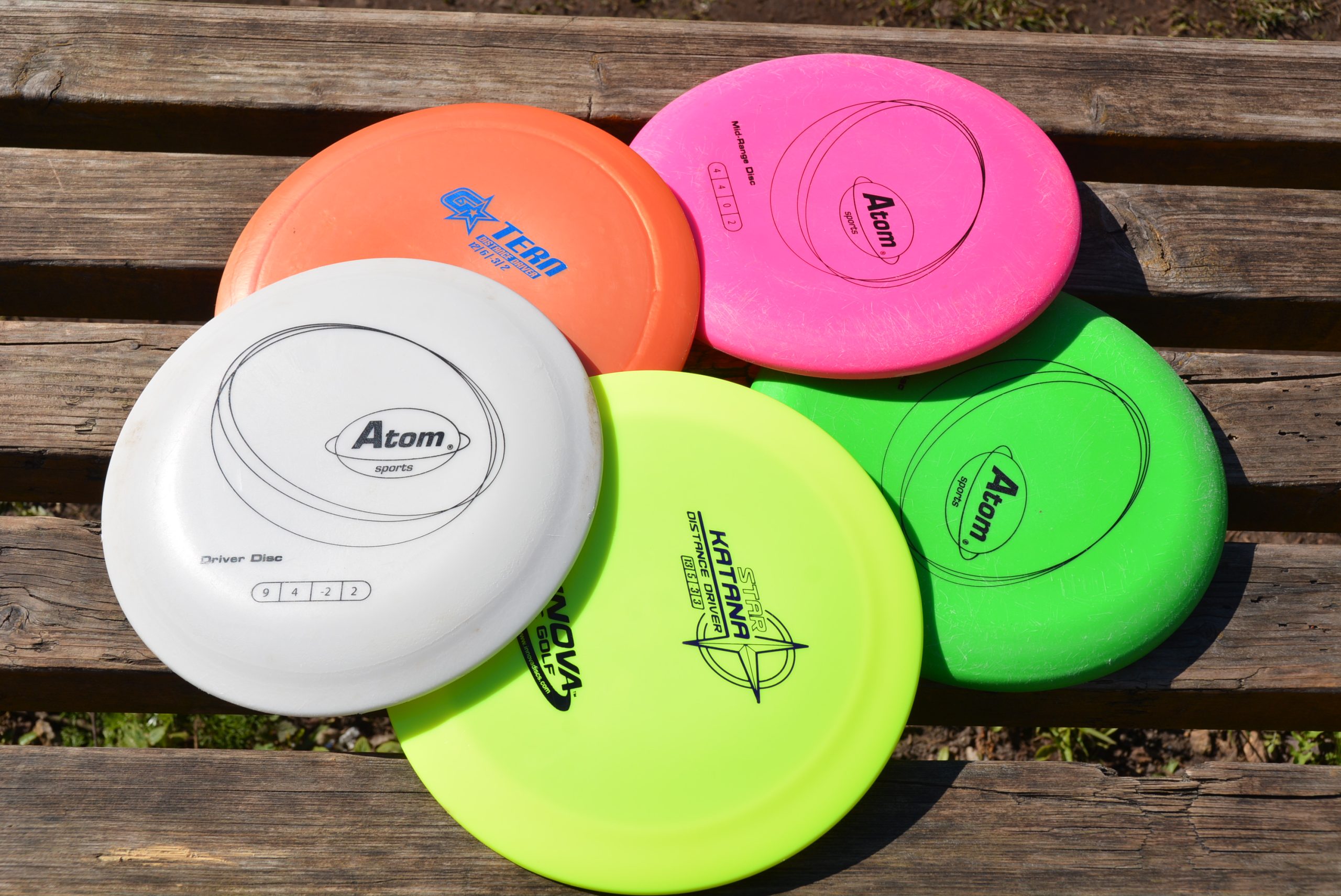
    A beginner disc golf bag does not need to look like a professional player’s collection. A small set of familiar discs gives you fewer variables to manage and more chances to learn what your release, angle and speed are actually doing.

    Start with three useful jobs

    1. A putter for short throws. Use it for putting and gentle approaches. Choose one that feels comfortable in your hand and practise with it often enough to recognise a clean release.
    2. A midrange for learning flight. A controllable midrange can show you whether the disc is turning because of your angle, speed or nose position without demanding a full-power throw.
    3. A fairway disc for extra reach. Pick a fairway option you can keep on a usable line. If it only works when thrown hard, it is probably not helping you learn yet.

    These are jobs, not mandatory moulds. Borrowing discs is a sensible way to find out what feels comfortable before buying more. The right starting bag is the one you can throw, find and carry without fuss.

    Choose control before speed

    Faster discs can be useful later, but they often ask for more speed and cleaner timing. For a new player, a slower disc that flies on a predictable line is usually easier to practise with than a disc that promises distance but fades early or turns unexpectedly.

    Try a disc at the throwing speed you actually use on the course. If the disc feels difficult to keep in the fairway, step down in speed or choose a more neutral flight before adding power. Progress comes from repeatable throws, not from carrying the most advanced disc.

    Keep the bag easy to understand

    Mark or remember one job for each disc: putting, straight midrange, controlled fairway or another specific use. Avoid buying several discs that all fill the same role before you know what you want to change. A simple bag makes it easier to review a round and ask a useful question: did the throw fail, or did I choose a disc I could not control?

    Keep a towel, water and a way to record your score if they help you play comfortably. Gear that solves a real problem is more valuable than an accessory that simply adds weight.

    When to add another disc

    Add a new option when you can describe the gap it fills. You might want a more stable disc for a particular wind, a softer landing option for approaches or a spare for wet conditions. Test one change at a time so you can tell what it does.

    Do not let a new disc replace practice with the discs already in your bag. If a throw is inconsistent, changing equipment may hide the pattern rather than fix it. Learn the familiar discs first, then add deliberately.

    FAQs

    How many discs does a beginner need?

    There is no required number, but a putter, a controllable midrange and a fairway option can cover several common jobs while you learn.

    Should beginners use fast discs?

    Not necessarily. Choose discs that you can control at your current speed; a slower, predictable disc may be more useful for learning.

    Can I start with borrowed discs?

    Yes. Borrowing is a practical way to test different feels and flights before deciding what belongs in your own bag.

    What should each disc in my bag do?

    Give each disc a clear job, such as putting, straight midrange shots, controlled fairway throws or a specific approach line.

    When should I buy another disc?

    Add one when you can explain the gap it fills and test it without confusing it with several other new discs.

    What should I skip at the start?

    Skip buying several discs that all fill the same role, and avoid choosing equipment only because it is faster or marketed for more distance.

  • How to run a casual doubles night that people come back to

    How to run a casual doubles night that people come back to

    The best club nights are easy to join, quick to explain and enjoyable even for the players who finish last. Casual doubles works well because experienced players can support newer ones without making the evening feel like a lesson. The trick is to give the night enough structure to feel organised, while leaving plenty of room for conversation and fun.

    Keep the format simple

    Random-draw doubles is a dependable starting point. Pair an experienced player with someone newer where possible, play best shot, and explain only the rules people need for the round. Nine or eighteen holes can work; choose the length that leaves time for a relaxed finish.

    Tell players how teams are formed, where to meet and how the winning score will be decided. If you add a handicap, novelty rule or side game, write it down before the first tee so nobody is surprised.

    Make the first round welcoming

    Give new players a five-minute briefing: where to stand, how to mark a lie, how to take turns and what to do if a disc goes out of bounds or is lost. Keep the explanation practical and invite questions.

    Pair new players with friendly people who will explain without taking over. A small welcome at the start often matters more than the prize at the end.

    Use a small side game

    One closest-to-the-pin hole, a longest-putt challenge or a playful award for the best team spirit can lift the energy without adding much administration. Keep it optional and low pressure. The main event should remain easy to follow.

    Finish with a clear result

    Collect cards, check that every hole has a score and announce the result before people leave if you can. Thank the course volunteers and anyone who helped with groups, cards or the briefing. A quick photo or short results post makes the next night easier to promote, provided everyone is comfortable with it.

    Use feedback to build a habit

    Ask one simple question afterwards: what should stay the same, and what should change next time? Record the answer while it is fresh. Rotate the organiser role if possible, and keep the same meeting point and day of the week when that suits the club.

    FAQs

    How many players do I need?

    There is no fixed number. Start with the players you have, form groups that keep play moving and use a shorter round if attendance is small.

    Should teams be random?

    Random teams are simple and fair for a social night. You can also balance experience deliberately when the goal is to help newer players feel comfortable.

    Is best-shot doubles hard to explain?

    No. Explain that both partners throw, the team chooses the better lie, and both throw again from that lie until the hole is complete.

    Do I need prizes?

    No. A result, a thank-you and a fun side award are enough. If you offer a prize, keep it optional and explain it before play.

    How do I include complete beginners?

    Give them a friendly partner, a short rules briefing and permission to ask questions. A nine-hole format can also make the first night less tiring.

    What should I do after the event?

    Check the cards, share the result if appropriate, thank helpers and record one improvement for next time. Consistent follow-up helps a casual night become a regular club fixture.